The Credential That Actually Matters
If you’ve ever searched for a “nutritionist near me,” you’ve probably seen a mix of titles — nutritionist, nutrition coach, dietitian, holistic nutritionist, wellness specialist, and more. It’s easy to assume they all mean the same thing and are all equally qualified. But there’s one key distinction that truly matters for your health outcomes and results — whether your provider is a Registered Dietitian. This distinction isn’t just me nitpicking over titles — it’s about education, licensure, and the ability to use science-backed interventions to improve health safely and effectively.
What Is a Registered Dietitian?
A Registered Dietitian is a nationally credentialed nutrition expert who has completed extensive training and maintains rigorous continuing education to stay current with evolving science. The credential “RDN” (Registered Dietitian Nutritionist) is interchangeable with “RD.” Some choose to add the ‘N’ since more people tend to recognize the nutritionist term.
To earn the title of RD, dietitians must complete a bachelor’s or master’s degree in nutrition or dietetics from an ACEND-accredited program, undergo 1,000+ hours of supervised practice across clinical, community, and foodservice settings, pass the national registration exam administered by the Commission on Dietetic Registration, and maintain their credentials with 75 hours of continuing education every five years.
Many RDs go beyond the minimum requirements by earning graduate degrees and specialized certifications in areas like sports nutrition, diabetes care, or eating disorders. As a Certified Specialist in Sports Dietetics (CSSD), I had to accumulate thousands of hours of time practicing dietetics in sports-specific settings and pass another national board exam.
What Is a Nutritionist?
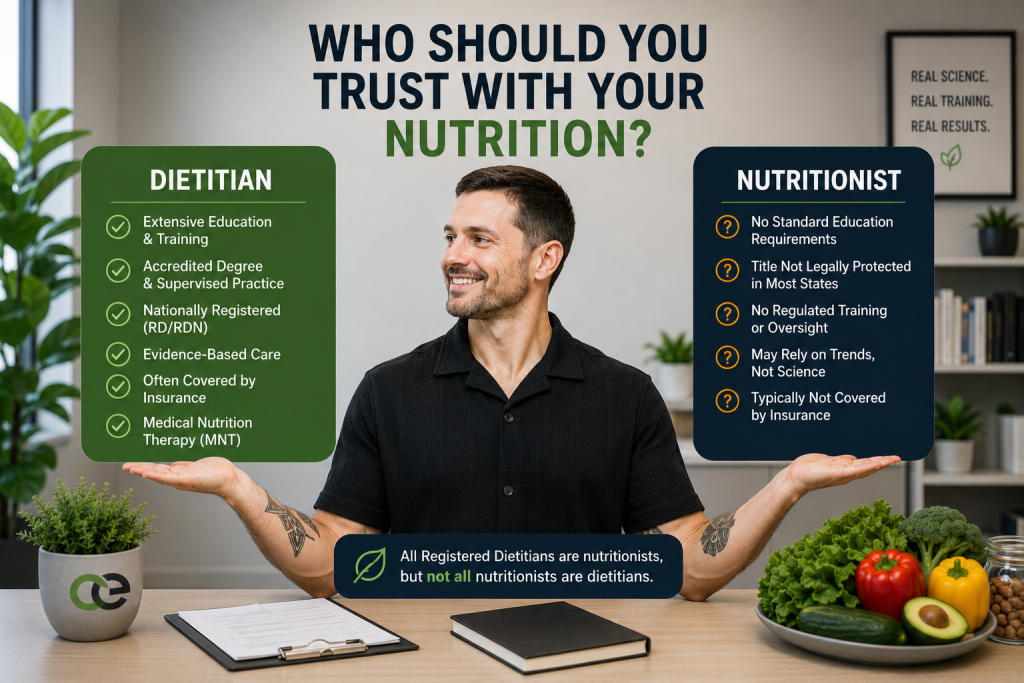
Here’s where things get confusing: the term “nutritionist” isn’t legally protected in most states. Anyone can call themselves a nutritionist, whether they’ve completed a formal degree in nutrition science, taken a 20-minute online course, or have no experience whatsoever.
There are credible nutritionists who hold legitimate qualifications, such as a Certified Nutrition Specialist (CNS), which requires a master’s degree and board exam. However, without letters like “RD,” “RDN,” or “CNS,” there’s often no guarantee of formal training or regulatory oversight. That means no standardized code of ethics, no supervised practice, and no accountability to a professional board if something goes wrong. All Registered Dietitians are nutritionists, but not all nutritionists are dietitians.
Advantages of Working With a Registered Dietitian
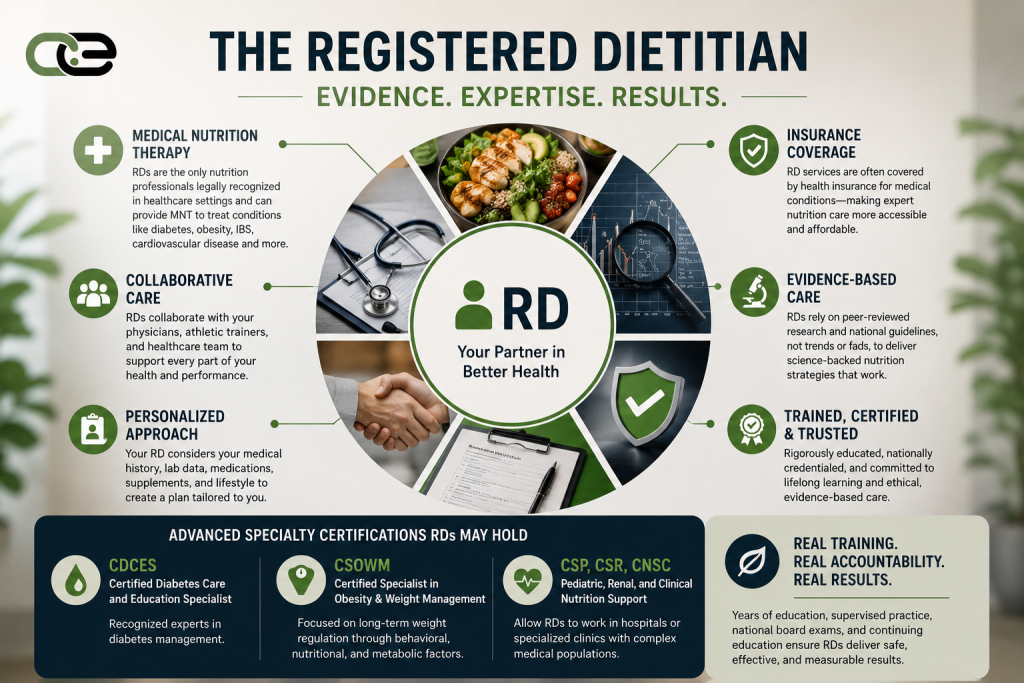
Choosing a Registered Dietitian gives you access to evidence-based care that’s medically integrated, safe, and personalized. RDs are the only nutrition professionals legally recognized in healthcare settings. They can work in hospitals, primary care, and private practice because their training allows them to provide medical nutrition therapy (MNT), which is the use of nutrition interventions to treat conditions like diabetes, obesity, irritable bowel syndrome, and cardiovascular disease to name just a few.
Because RDs are licensed professionals, their services are often covered by health insurance. Nutritionists without RD credentials typically can’t bill insurance for medical conditions, so you’re likely on the hook paying out of pocket for services.
Dietitians rely on peer-reviewed research and national guidelines, not trends or anecdotal evidence. That means any nutrition plan you receive is grounded in current science, not marketing hype or trends. Whether you’re attempting to lose weight, training for a race, managing PCOS, or improving metabolic health, your dietitian uses data-driven strategies to create measurable change.
A dietitian is going to consider your full medical history, lab data, medications, supplements, and environmental factors, to name a few. They can collaborate directly with your physicians (or athletic trainer for all of you athletes reading this) to ensure your nutrition plan supports every part of your lifestyle.
Work With Us!
If you’re in the Raleigh area and want help applying this in real life, the team at Chain Effect works with clients on personalized nutrition, performance, and sustainable habit building. Whether your goal is fat loss, muscle gain, or improving energy, working with a Registered Dietitian locally can make this process far more practical and consistent.